Chulu Far East Peak via Nar phu Valley
- Duration 23 Days
- Max altitude 6,059m
- Difficulty Challenging
- Group size 4-12 Pax
- Best season Spring & Autumn
- Stay Tea House + Camping
Cross the hidden valleys of Nar Phu and Kang La before rising onto a 6,059-metre summit above the Annapurna Himalaya.
Some Himalayan climbs are memorable because of the summit. Others are memorable because of everything that happens before reaching it. HVTreks Chulu Far East Peak Climbing brings both together, combining an isolated journey through Nar and Phu, a crossing of Kang La and the ascent of a 6,059-metre Himalayan peak.
The adventure begins in Kathmandu before travelling overland into the Marsyangdi Valley. From Koto, the character of the journey changes completely as the trail turns away from the familiar Annapurna corridor and enters the restricted Nar Phu Valley.
Here, forests gradually give way to steep gorges, eroded cliffs and dry trans-Himalayan landscapes. Ancient chortens, mani walls, monasteries and compact stone settlements reveal a mountain culture shaped by geography, Buddhism and centuries of isolation.
HVTreks deliberately builds acclimatisation into this cultural section of the trip. Time in Phu Gaon at 4,080 metres and Nar Village at 4,110 metres allows climbers to experience the valley rather than simply passing through it, while helping the body prepare for the higher challenges ahead.
The transition from trekking to mountaineering starts with Kang La at 5,306 metres. Crossing the pass provides the first major exposure above 5,000 metres and opens an extraordinary panorama towards the Annapurna massif before the route descends towards Ngawal.
From the Manang side, the journey turns towards its main climbing objective.
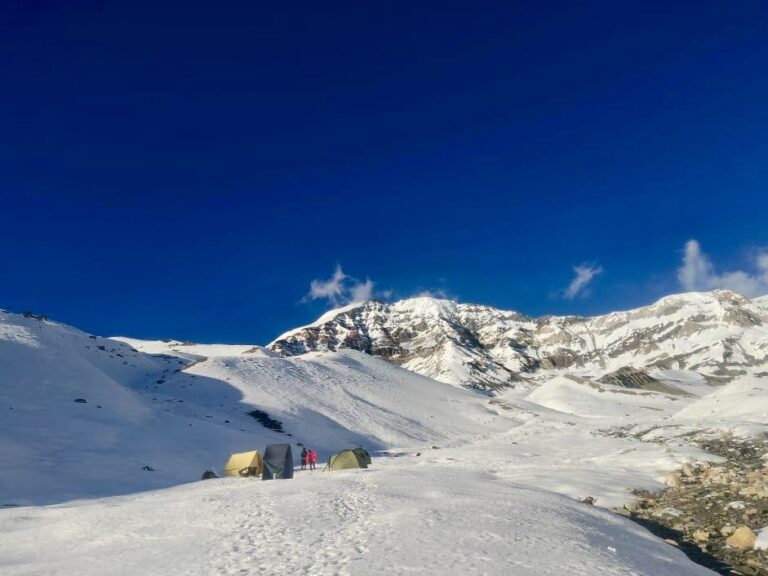
At Chulu Far East Base Camp at 4,800 metres, HVTreks introduces the equipment and techniques needed higher on the mountain. Climbers practise working with crampons, an ice axe, harness, ropes and ascenders before moving to High Camp.
An additional weather-assessment day is intentionally built into the climbing programme. The mountain, not the printed itinerary, determines when an ascent should proceed.
From High Camp at 5,400 metres, summit morning begins in darkness. The route climbs into snow and increasingly exposed high-altitude terrain before reaching Chulu Far East at 6,059 metres. Chulu Far East is generally regarded as one of the more approachable Chulu summits, although specialised mountaineering equipment and proper high-altitude preparation remain necessary.
From the summit, climbers stand above the Manang Valley with a remarkable Himalayan panorama stretching across the Annapurna mountains and neighbouring peaks.
Yet reaching the summit is only part of what makes this particular HVTreks itinerary distinctive. By combining Nar, Phu, Kang La and Chulu Far East, the journey brings together remote Himalayan culture, demanding high-altitude trekking and genuine mountaineering rather than treating the mountain as an isolated climbing objective.
For experienced trekkers ready to progress into 6,000-metre Himalayan climbing, Chulu Far East offers an especially rewarding step forward.
- Reach the 6,059 -metre summit of Chulu Far East
- Climb in prime spring or autumn conditions
- Journey overland deep into the Manang Himalaya
- Discover the ancient Buddhist villages of Nar and Phu
- Step into genuine technical Himalayan mountaineering
- Train and climb with dedicated HVTreks mountain support
Best time to go
- J
- F
- M
- A
- M
- J
- J
- A
- S
- O
- N
- D
- Best
- Good
- Not Recommended
Difficulty
Challenging
Demanding high-altitude adventures involving long days, remote terrain, high passes or mountaineering sections that may require specialised equipment. Strong fitness and previous high-altitude or relevant climbing experience are recommended.
Day by day
Day01 Arrival in Kathmandu 1,400 m Airport Transfer
Arrive at Tribhuvan International Airport, where the HVTreks team will welcome you and transfer you to your hotel. Meet the team and rest after your international journey.
Day02 Kathmandu Valley Sightseeing and Climbing Preparation 1,400 m Full day
After breakfast, explore some of Kathmandu Valley's remarkable heritage and spiritual sites with a local guide. Depending on your interests, the programme may include Pashupatinath Temple, Boudhanath Stupa, Patan Durbar Square and Swayambhunath. The tour normally runs from around 9:00 am to 4:00 pm. HVTreks will also complete the necessary climbing preparations, equipment checks and expedition arrangements. Lunch and dinner are at your own expense.
Day03 Drive from Kathmandu to Tal 1,700 m 6-7 hrs drive
Leave Kathmandu and begin the overland journey towards the Annapurna region. Follow river valleys through terraced farmland, traditional settlements and changing hill scenery, with distant Himalayan views appearing along the way. After reaching Besisahar, continue deeper into the Marsyangdi Valley towards Tal.
Day04 Trek from Tal to Koto 2,610 m 5-6 hrs trek
Begin the trekking section through pine forest and rugged Marsyangdi Valley terrain. Long climbs, stone steps and uneven trail make this a demanding opening day, but waterfalls, suspension bridges, rushing rivers and mountain views provide constant rewards. Reach Koto, where the route prepares to leave the main Annapurna corridor and enter the remote Nar Phu Valley.
Day05 Trek from Koto to Meta 3,570 m 6-7 hrs trek
Complete the required restricted-area formalities before following the Suti Khola into the Nar Phu Valley. Cross streams and suspension bridges while moving through beautiful pine forest towards Dharmasala. A steeper climb follows as the landscape gradually opens into the dry high country of the trans-Himalayan region. Arrive at Meta with impressive views towards Annapurna II and Lamjung Himal.
Day06 Trek from Meta to Kyang 3,840 m 7-8 hrs trek
Continue deeper into an increasingly wild landscape where forest gives way to barren cliffs, eroded pinnacles and broad mountain valleys. The trail passes isolated seasonal settlements used by yak, sheep and goat herders before reaching Kyang. Mani walls and Buddhist symbols mark the transition into the culturally distinctive upper Nar Phu region.
Day07 Trek from Kyang to Phu Gaon 4,080 m 3-4 hrs trek
Descend briefly into the narrow gorge before climbing towards Phu. Chortens and long mani walls appear as the trail approaches the village entrance. Phu Gaon sits dramatically above the valley, its stone-built homes clustered closely together to conserve limited agricultural land. The surrounding landscape feels genuinely remote, with the Tibetan frontier lying beyond the mountains to the north.
Day08 Acclimatisation and Exploration at Phu Gaon 4,080 m Full day
Spend an essential acclimatisation day in one of the Nar Phu Valley's most distinctive settlements. Explore stone alleyways, traditional homes and the centuries-old Buddhist heritage of Phu, including Tashi Lhakhang Monastery. The slower pace provides valuable recovery while offering an intimate look at a high-altitude community whose culture remains strongly connected to Tibetan traditions.
Day09 Trek from Phu Gaon to Nar Phedi 3,490 m 5-6 hrs trek
Retrace part of the valley through rugged mountain terrain, passing chortens, mani walls and remnants of old settlements. The route gradually descends into greener surroundings before reaching Nar Phedi. Overnight near the monastery provides a peaceful contrast to the demanding mountain landscape and adds another memorable cultural dimension to the journey.
Day10 Trek from Nar Phedi to Nar Village 4,110 m 2-3 hrs trek
Make a steady ascent through alpine terrain towards Nar Village. Prayer flags, chortens and mani walls accompany the climb, while the surrounding mountains become increasingly prominent. The relatively short walking day leaves time to settle into Nar and prepare for another important acclimatisation day.
Day11 Acclimatisation and Exploration at Nar Village 4,110 m Full day
Spend the day exploring Nar's narrow lanes, stone houses, monasteries and high-altitude surroundings. The village offers a rare opportunity to experience everyday life in the isolated Nar Phu region. Depending on conditions and individual fitness, take a short acclimatisation hike above the settlement before returning to rest and prepare for Kang La.
Day12 Cross Kang La Pass and Trek to Ngawal 5,306 m 7-8 hrs trek
Leave Nar early for one of the defining days of the journey. Climb steadily through increasingly barren alpine terrain towards Kang La Pass at 5,306 metres. From the pass, enjoy sweeping views across Annapurna II, Gangapurna, Tilicho Peak and the surrounding ranges. A long descent then leads into greener surroundings before reaching Ngawal in the Manang Valley.
Day13 Trek from Ngawal to Yak Kharka 3,970 m 5-6 hrs trek
Continue through high alpine terrain and broad grazing areas used by local yak herders. Views across the Annapurna range accompany much of the day. Although the route is less dramatic than the Kang La crossing, the controlled pace helps preserve acclimatisation while bringing the team closer to the Chulu climbing zone.
Day14 Trek from Yak Kharka to Chulu Far East Base Camp 4,800 m 5-6 hrs trek
Leave the established trekking trail and move towards the mountain through increasingly rugged alpine terrain. Pass seasonal grazing areas and glacial landscapes while gaining altitude towards Chulu Far East Base Camp. Establish the expedition camp at 4,800 metres beneath the mountain and settle into the climbing phase of the journey.
Day15 Climbing Training and Summit Preparation 4,800 m Full day
Spend the day preparing for the ascent with the HVTreks climbing team. Practise using crampons, an ice axe, harness, ascender and climbing ropes, including techniques for moving safely up and down fixed lines. Equipment is checked carefully and the climbing plan is reviewed before moving to High Camp.
Day16 Weather Assessment and Contingency Day 4,800 m Full day
Keep a dedicated day at Base Camp to monitor weather, snow conditions and team readiness. This flexibility allows HVTreks to adjust the climbing schedule rather than forcing the ascent to follow a predetermined date. If conditions are favourable, the day also provides valuable additional acclimatisation and recovery.
Day17 Chulu Far East Base Camp to High Camp 5,400 m 4 hrs climb
Climb north from Base Camp towards High Camp through increasingly high alpine terrain. The route offers expansive views towards Chulu East, Chulu West, Pisang Peak and the Annapurna mountains. Reach High Camp at 5,400 metres, settle into the tents and prepare equipment for an early summit start.
Day18 Chulu Far East Summit and Descend to Yak Kharka 6,059 m 10-12 hrs climb/descent
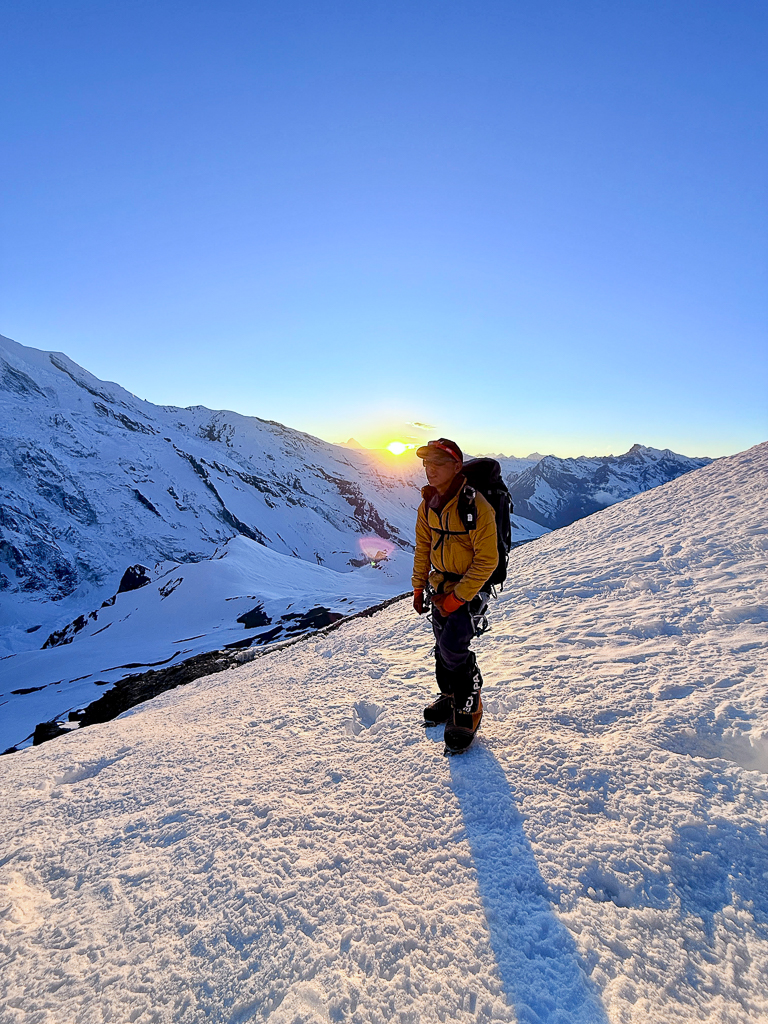
Begin before dawn with head torches lighting the route above High Camp. The ascent involves snow and high-altitude terrain with steeper and more exposed sections as the summit approaches. Reach the 6,059-metre summit of Chulu Far East and enjoy a magnificent panorama across the Annapurna Himalaya before descending carefully through High Camp and continuing to Yak Kharka.
Day19 Trek from Yak Kharka to Manang 3,540 m 4-5 hrs trek
With the summit climb complete, descend into the more comfortable surroundings of the Manang Valley. The reduction in altitude provides welcome recovery after the summit effort. Reach Manang, where established lodges and the distinctive Tibetan-influenced culture of the upper Marsyangdi Valley offer a relaxing change of pace.
Day20 Drive from Manang to Besisahar 760 m 5-6 hrs drive
Leave Manang by jeep and follow the rugged mountain road through alpine forest and scattered settlements. As the route loses altitude, the landscape becomes greener before reaching the Marsyangdi river basin and the busy trailhead town of Besisahar.
Day21 Drive from Besisahar to Kathmandu 1,400 m 6-7 hrs drive
Travel back to Kathmandu along the Marsyangdi and Trishuli river corridors. The journey follows the Prithvi Highway into Kathmandu Valley, with arrival time depending on road and traffic conditions. Transfer to your hotel for a well-earned rest.
Day22 Rest, Shopping and Optional Bhaktapur Sightseeing 1,400 m Full day
Enjoy a free day in Kathmandu for rest, shopping or personal exploration. If you wish, HVTreks can arrange an optional 3-4 hour visit to historic Bhaktapur at an additional cost. In the evening, join the HVTreks team for a farewell dinner and celebrate the completion of your Chulu Far East adventure.
Day23 Final Departure from Kathmandu 1,400 m Airport transfer
Make sure your passport, tickets and personal belongings are ready for departure. An HVTreks representative will transfer you to Tribhuvan International Airport approximately three hours before your flight, bringing your 23-day Himalayan adventure to a close.
A steady, well-paced climb
Altitude profile
Highest point reached each day, in metresView as table
| Day | Highest Point | Altitude |
|---|---|---|
| Day 1 | Kathmandu | 1,400 m |
| Day 2 | Kathmandu | 1,400 m |
| Day 3 | Tal | 1,700 m |
| Day 4 | Koto | 2,610 m |
| Day 5 | Meta | 3,570 m |
| Day 6 | Kyang | 3,840 m |
| Day 7 | Phu Gaon | 4,080 m |
| Day 8 | Phu Gaon | 4,080 m |
| Day 9 | Phu Gaon | 4,080 m |
| Day 10 | Nar Village | 4,110 m |
| Day 11 | Nar Village | 4,110 m |
| Day 12 | Kang La Pass | 5,306 m |
| Day 13 | Yak Kharka | 3,970 m |
| Day 14 | Chulu Far East Base Camp | 4,800 m |
| Day 15 | Chulu Far East Base Camp | 4,800 m |
| Day 16 | Chulu Far East Base Camp | 4,800 m |
| Day 17 | Chulu Far East High Camp | 5,400 m |
| Day 18 | Chulu Far East Summit | 6,059 m |
| Day 19 | Yak Kharka | 3,970 m |
| Day 20 | Manang | 3,540 m |
| Day 21 | Kathmandu | 1,400 m |
| Day 22 | Kathmandu | 1,400 m |
| Day 23 | Kathmandu | 1,400 m |
Clear pricing, no surprises
Included
- Airport Transfers: Private vehicle for airport pickup and drop-off
- Kathmandu Hotel: 3 nights in a hotel with breakfast
- Welcome Dinner: Welcome dinner in Kathmandu
- Permits: Chulu East climbing permit, NMA fees, and Annapurna Conservation Area permit
- Special trekking permit for Nor Phu and Kang La pass (5320m)
- Garbage Management: Garbage deposit and transportation fees.
- Staff Insurance: Medical and emergency rescue insurance for Nepalese staff
- Map: Trekking and climbing map
- Duffle Bag: Himalayan Vacation Treks & Expedition
- Transportation: comfortable vehicle according to the itinerary.
- Equipment Transport: Transportation of expedition equipment from Kathmandu to Manang by jeep and to Base Camp by porter/mule
- Member Baggage: Up to 24 kg of personal luggage per member, carried by porters
4Night 5Days in including camping meals - Trekking Guide: Government-licensed trekking guide throughout the trek
- Climbing Guide: Government-licensed climbing guide from Base Camp to the summit and back
- Gear Assistance: Climbing guides help carry equipment to the high camps
- Climbing Guide Salary: Guide salary, food, equipment, and clothing
- High Camp Services: Tents, lights, cooking gas, cooking equipment, high-altitude food, ropes, and necessary group climbing equipment
- High Camp Tents: Two members will share one tent
- Weather Forecast: Weather information throughout the expedition
- Guide Leader: Leads the team and manages safety and logistics
- Assistant Guide: Helps the leader, clients, and camp setup
- Cook: Prepares meals during camping
- Kitchen Staff: Helps with cooking and carries kitchen equipment
- Porters: One porter for every two trekkers, plus additional porters as required
- Medical Kit: Basic medical kit for members and staff
- Certificate: HVtreks and NMA certificate for Chulu East climbing, Nar Phu Valley
Not included
- International Flights: Flights to and from Kathmandu.
- Nepal Visa: USD 50 for a 30-day visa.
- Kathmandu Meals: Lunch and dinner in Kathmandu.
- Extra Hotel Nights: Any additional nights caused by early arrival, late departure, early return, or delays/cancellations.
- Personal Travel Insurance: Insurance covering medical treatment, high-altitude rescue, helicopter
- evacuation, trip cancellation/interruption, and repatriation is mandatory.
- Personal Expenses: Phone calls, internet, toiletries, battery charging, hot showers, laundry, soft drinks, beer, and alcohol.
- Personal Climbing Gear: Clothing, bags, packing items, personal medical supplies, trekking gear, and climbing equipment.
- Toiletries: Soap, shampoo, toilet paper, toothpaste, and other personal hygiene items.
- Filming Permits: Special permits for filming, cameras, or drones.
- Internet: Internet service during the trek and expedition.
- Tips: Minimum recommended tip of $100 for high-camp and other staff.
- Summit Bonus: USD250 for the climbing guide after a successful summit.
- Other Expenses: Any service, activity, or expense not specifically mentioned in the Included” section.
Meal during the trek.
You may also like
Chulu Far East Peak
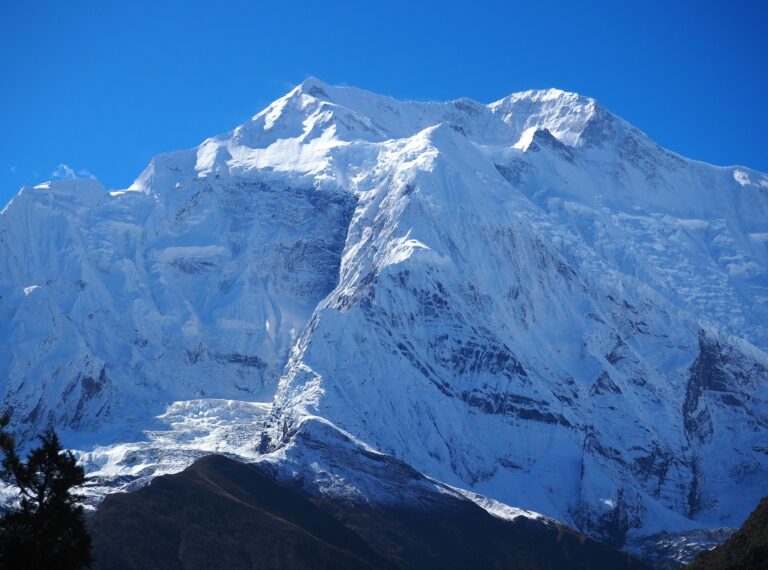
Rise above the Manang Valley onto snow and high Himalayan terrain for an unforgettable 6,059-metre summit. Some Himalayan climbs are memorable because of the…
Himlung Himal Expedition
Journey through a hidden Himalayan valley and rise beyond 7,000 metres into a world of snow, glaciers and remote mountain wilderness. Hidden beyond the…
Pisang Peak
Step beyond trekking onto snow and ice, reaching a spectacular 6,091-metre summit above the Manang Valley. Rising to 6,091 metres above the Manang Valley,…