Mustang Teeji Festival
- Duration 16 Days
- Max altitude 4230m
- Difficulty Moderate
- Group size 2-16 Pax
- Stay Tea House
Journey through Mustang’s timeless Himalayan desert to ancient Lo Manthang and experience the vibrant Tiji Festival at the heart of its living Buddhist culture.
The Teeji Festival—also spelled Teeji—is one of Nepal’s most culturally and spiritually significant events, held each year in Lo-Manthang, the walled capital of the ancient Kingdom of Mustang. Rooted in the ancient Bon shamanistic traditions that predate Buddhism, Teeji has been celebrated for over 600 years. The name “Teeji” is short for Tempa Chhirim, which translates to Prayer for World Peace.
This vibrant, three-day festival centers on sacred ritual dances performed by the monks of Chhyode Monastery, re-enacting the legendary triumph of Dorje Sonam (a deity believed to be an incarnation of Buddha) over the evil demon Ma Tam Ru Ta, who threatened to destroy the Mustang region. The dances are rich in symbolism and pageantry, with elaborate costumes and choreography that have remained unchanged for centuries. Months of preparation and purification lead up to this colorful and moving celebration.
Why Attend the Teeji Festival?
For the people of Mustang, Teeji is a time of joy, reunion, and prayer. Locals dress in their finest traditional attire, and the whole region comes alive with music, color, and communal spirit. For visitors, it’s a rare chance to witness an authentic Tibetan Buddhist festival in one of the most isolated and culturally preserved regions of the Himalayas.
About the Region
Mustang, located in north-central Nepal at the headwaters of the Kali Gandaki River, is a high-altitude desert valley that feels more like Tibet than Nepal. The area is defined by dramatic, wind-eroded cliffs, color-banded canyons, and ancient whitewashed villages—all set beneath the towering peaks of the Annapurna and Dhaulagiri ranges. The people of Upper Mustang speak Tibetan and maintain a rich heritage of language, art, and religion.
Trekking to Lo-Manthang
Himalayan Vacation Treks and Expedition (HV Treks) offers a specially curated Teeji Festival Trek each May to coincide with the festival dates. The journey begins with a scenic flight to Jomsom, followed by a 9-day trek through the arid, awe-inspiring landscapes of the Upper Mustang. The route climbs in and out of the Kali Gandaki Valley, offering unforgettable views and insights into traditional mountain life.
-
Horses can be hired for part or all of the trek (luggage is carried by horses or mules throughout).
-
Jeep transport is available on certain sections for those who prefer less walking.
The 2027 festival in Upper Mustang (Lo Manthang) will take place from June 1st to 3rd, 2027.
Don’t miss this once-in-a-lifetime opportunity to witness one of the most extraordinary cultural celebrations in the Himalayas—where legend, ritual, and the stark beauty of Mustang converge.
- Ancient walled Lo Manthang
- Wild Mustang landscapes
- Scenic Jomsom flight
- Colourful Tiji Festival
- Tibetan-influenced culture
- High-pass Mustang adventure
Best time to go
- J
- F
- M
- A
- M
- J
- J
- A
- S
- O
- N
- D
- Best
- Good
- Not Recommended
Difficulty
Moderate
Designed for active travellers with good fitness, involving longer days, sustained ascents and higher-altitude terrain. Previous trekking experience is helpful, but technical climbing skills are generally not required.
Day by day
Day01 25 May 2027: Arrival in Kathmandu 1400m Airport Transfer
Welcome to Kathmandu, Nepal’s vibrant capital, renowned for its historic monuments, Hindu temples, Buddhist stupas and monasteries. On arrival at Tribhuvan International Airport, a Himalayan Vacation Treks & Expedition representative will welcome you and transfer you to your hotel. Settle in and relax before your Upper Mustang adventure begins.
Day02 26 May 2027: Kathmandu to Pokhara 827m Approx. 6 hrs by tourist bus
Travel from Kathmandu to Pokhara by comfortable air-conditioned tourist bus along the Prithvi Highway. The approximately 200 km journey follows scenic river valleys with views towards Ganesh Himal, Lamjung Himal and the Annapurna range. In the evening, your guide will brief you about the trek ahead.
Day03 27 May 2027: Pokhara to Jomsom, Trek to Kagbeni 2810m 20 min flight + 3–4 hrs trek
Take an early-morning flight from Pokhara to Jomsom and enter the dramatic, drier landscapes of the Mustang region. After tea or coffee in Jomsom, trek towards Kagbeni, a traditional village at the gateway to Upper Mustang, known for its Tibetan-influenced culture and Buddhist monastery.
Day04 28 May 2027: Kagbeni to Chele 3050m 5–6 hrs trek
Follow the Kali Gandaki River through the arid landscapes of Upper Mustang. Pass traditional Buddhist villages, gompas and colourful rock formations on the way to Chele. Near the village, the Kali Gandaki cuts dramatically through the surrounding rock formations.
Day05 29 May 2027: Chele to Shyangbochen 3800m 5–6 hrs trek
A rewarding day across the high passes of Mustang. Cross Taklam La (3,624m), Dajori La (3,735m), Bhena La (3,860m) and Yamda La (3,860m). Along the way, enjoy expansive views of rugged cliffs, barren valleys and the distinctive high-desert scenery of Upper Mustang.
Day06 30 May 2027: Shyangbochen to Ghami 3520m 5–6 hrs trek
Walk through varied uphill and downhill terrain towards Geling, known for its gompa, stupas, chortens and mani walls. Continue across Nyi La (4,025m), with impressive views towards Mustang Valley, Nilgiri and the Annapurna range. Cross Ghami La (3,765m) before descending towards the traditional village of Ghami.
Day07 31 May 2027: Ghami to Charang 3560m 4–5 hrs trek
Leave Ghami and continue through Mustang’s striking barren landscape towards Charang, one of the region’s larger traditional settlements. Whitewashed houses and fluttering prayer flags contrast beautifully against the surrounding cliffs and peaks. Explore Charang’s impressive old palace and large red gompa with your guide.
Day08 1 June 2027: Charang to Lo Manthang 3810m 4–5 hrs trek
Continue towards Lo Manthang, crossing Lo La (3,950m) before your first unforgettable view of the ancient walled city. Once the capital of the Mustang Kingdom, Lo Manthang is characterised by its whitewashed palace, red monasteries, chortens, stupas and colourful prayer flags. Arrive as the region prepares for the Tiji Festival.
Day09 2 June 2027: Lo Manthang 3810m Festival observation
Spend the day experiencing the colourful Tiji Festival in the heart of Lo Manthang. This important Buddhist celebration symbolises the victory of good over evil and features elaborate masked dances performed to the rhythm of drums, cymbals and traditional gyaling. The festival is associated with the story of Dorje Jono, who battled destructive forces to protect Mustang and its people.
Day10 3 June 2027: Lo Manthang to Ghami 3520m 6–7 hrs trek
Say farewell to Lo Manthang and begin the return journey through Upper Mustang. Climb towards Marang Chogo La (4,230m), the highest point of this itinerary, where magnificent views extend across Upper and Lower Mustang and towards the Tibetan plateau. Continue through the rugged landscape before descending to Ghami.
Day11 4 June 2027: Ghami to Samar 3660m 5–6 hrs trek
Retrace the spectacular Mustang trail, crossing Ghami La (3,765m) and later Nyi La (4,025m). Continue through the dramatic high-desert landscape before descending towards Samar for the night. Strong afternoon winds are common in this part of Mustang, making an early start worthwhile.
Day12 5 June 2027: Samar to Kagbeni 2810m 6–7 hrs trek
Continue towards the Kali Gandaki Valley, crossing Dajori La (3,735m) and Taklam La (3,624m). Descend steeply to Chele and continue through Chhusang before following the river towards Kagbeni. Spend the night in this atmospheric village between the Annapurna and Dhaulagiri ranges.
Day13 6 June 2027: Kagbeni to Pokhara 827m 7–8 hrs by local transport
Leave the Mustang region and travel back to Pokhara by local jeep or bus. Follow the Kali Gandaki corridor through changing mountain landscapes as you descend towards the greener hills and valleys surrounding Pokhara. Travel time depends on road and weather conditions.
Day14 7 June 2027: Pokhara to Kathmandu 1400m 6–7 hrs by tourist bus
Travel back to Kathmandu by tourist bus along the scenic Prithvi Highway. On arrival, transfer to your hotel. The remainder of the day is free for rest, shopping or exploring Kathmandu at your own pace.
Day15 8 June 2027: Kathmandu 1,400 m Rest/Sightseeing Day
Day16 9 June 2027: Departure from Kathmandu 1400m Airport Transfer
Your Upper Mustang and Tiji Festival journey comes to an end today. Make sure your passport, tickets and belongings are ready for departure. A Himalayan Vacation Treks & Expedition representative will transfer you to Tribhuvan International Airport approximately three hours before your scheduled international flight.
A steady, well-paced climb
Altitude profile
Highest point reached each day, in metresView as table
| Day | Highest point | Altitude |
|---|---|---|
| Day 1 | Kathmandu | 1400m |
| Day 2 | Kathmandu | 1400m |
| Day 3 | Kagbeni | 2,810m |
| Day 4 | Chele | 3,050m |
| Day 5 | Bhena La / Yamda La | 3,860m |
| Day 6 | Nyi La | 4,025m |
| Day 7 | Charang | 3,560m |
| Day 8 | Lo La | 3,950m |
| Day 9 | Lo Manthang | 3,810m |
| Day 10 | Marang Chogo La | 4,230m |
| Day 11 | Nyi La | 4,025m |
| Day 12 | Dajori La | 3,735m |
| Day 13 | Kagbeni | 2,810m |
| Day 14 | Kathmandu | 1400m |
| Day 15 | Kathmandu | 1400m |
| Day 16 | Kathmandu | 1400m |
Clear pricing, no surprises
Included
- Airport pickups and drops in a private vehicle
- Farewell dinners in Kathmandu
- Hotel accommodation in Kathmandu with breakfast
- Hotel in Pokhara on bed and breakfast in double rooms
- All ground transportation on a comfortable vehicle as per the itinerary
- Guided city tour in Kathmandu by private vehicle
- flight Pokhara-Jomosom – drive back to Pokhara by local transport
- Mule (for luggage transport)
- Mountain experienced, English-speaking and government-licensed friendly guide and assistant guide (Up to 4 persons one guide and assistant guide for more than 4 persons)s
- Staff costs including their salary, insurance, equipment, domestic airfare, food and accommodation
- Himalayan Vacation treks and expedition trekking bag/12-15kg capacity bag, and trekking map are yours to take
- Special permit for Mustang for 10 days
- Entrance fee Annapurna Conservation Area Permit
- First Aid Medical kit (carried by your Trekking leader for Nepali staff
- All government and local taxes
- All necessary paperwork and trekking permits
Not included
- Nepalese visa fee
- meals (breakfast, lunch, and dinner) during the Trekking/walking
- Excess baggage charge(s)
- Entrance fees for sightseeing/monument visits as per the itinerary
- Extra night accommodation in Kathmandu because of early arrival, late departure, early return from mountain (due to any reason) than the scheduled itinerary
- Lunch and evening meals in Kathmandu and Pokhara
- International flights
- Travel and rescue insurance
- Emergency Evacuation (Helicopter Rescue).
- Down jacket and sleeping bag and trekking Hiking shoes .
- Personal expenses (phone calls, laundry, bar bills, battery recharge, extra porters, bottle or boiled water, shower, etc.)
- Tips for guide(s), porter(s) and driver(s)
Good to know
1. Why should I trek Upper Mustang during the Tiji Festival instead of at another time?
The Tiji Festival transforms an Upper Mustang trek into a living cultural experience. The journey through Mustang’s dramatic cliffs, ancient settlements, monasteries and Tibetan-influenced landscapes is remarkable at any time, but during Tiji, Lo Manthang becomes the centre of a centuries-old Buddhist celebration.
For travellers interested in culture as much as trekking, this departure offers a rare opportunity to see Upper Mustang when its spiritual traditions are not simply preserved inside monasteries, but actively celebrated by the local community.
2. What actually happens during the Tiji Festival in Lo Manthang?
The Tiji Festival in Lo Manthang centres around elaborate Buddhist rituals and sacred masked dances performed by monks. The ceremonies symbolically represent the struggle between good and destructive forces and are deeply connected to the religious traditions of Mustang.
For visitors, the experience is visually extraordinary: colourful costumes, masks, horns, drums, monks, local families and ancient architecture come together against the stark Himalayan landscape of the former walled kingdom.
It is not simply a performance for tourists. That authenticity is exactly what makes Tiji one of Nepal’s most fascinating Himalayan festivals.
3. Is Tiji Festival just one day, or should I stay longer in Lo Manthang?
Do not plan this trip as a quick one-day festival visit.
Tiji traditionally unfolds over three days, with different rituals and ceremonies forming parts of the wider celebration. Staying in Lo Manthang for the festival also gives you time to appreciate the town beyond the main ceremonies, including its monasteries, traditional homes, narrow lanes and surrounding Mustang landscape.
For this trek, Lo Manthang is not simply another overnight stop. It is the cultural heart of the journey.
4. What makes Upper Mustang so different from Everest, Annapurna or Langtang?
Upper Mustang feels almost like another world.
Instead of heavily forested valleys, the landscape is dominated by wind-carved cliffs, deep canyons, barren ridges, caves, ancient settlements and striking red, brown and ochre terrain. Its strong Tibetan Buddhist heritage is reflected in centuries-old monasteries, chortens, mani walls, prayer flags and traditional villages.
Combine this landscape with the Tiji Festival in Lo Manthang, and the experience becomes very different from a conventional Nepal trekking holiday centred mainly on reaching a mountain viewpoint or base camp.
5. Who is the Upper Mustang Tiji Festival Trek best suited for?
This trek is ideal for travellers who want culture, photography, history and Himalayan adventure in the same journey.
It is particularly rewarding for photographers because Upper Mustang combines ancient architecture, colourful Buddhist ceremonies, traditional dress and unusual desert-like mountain scenery. Cultural travellers can experience the living traditions of Lo Manthang, while trekkers still enjoy the adventure of travelling through one of Nepal’s most distinctive restricted Himalayan regions.
If Everest is about standing beneath the world’s highest mountains, Upper Mustang during Tiji is about stepping into a Himalayan culture and landscape that feels preserved from another era.
You may also like
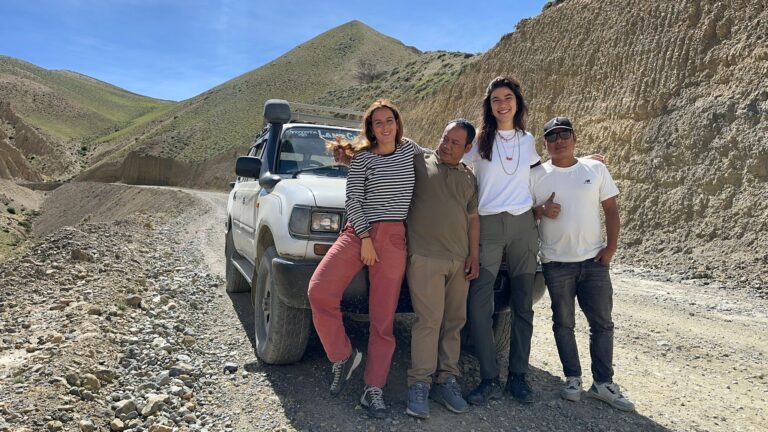
Upper Mustang Overland & Cultural Trek
Journey overland into the hidden world of Upper Mustang and walk through ancient Himalayan landscapes to the walled city of Lo Manthang. Beyond the…
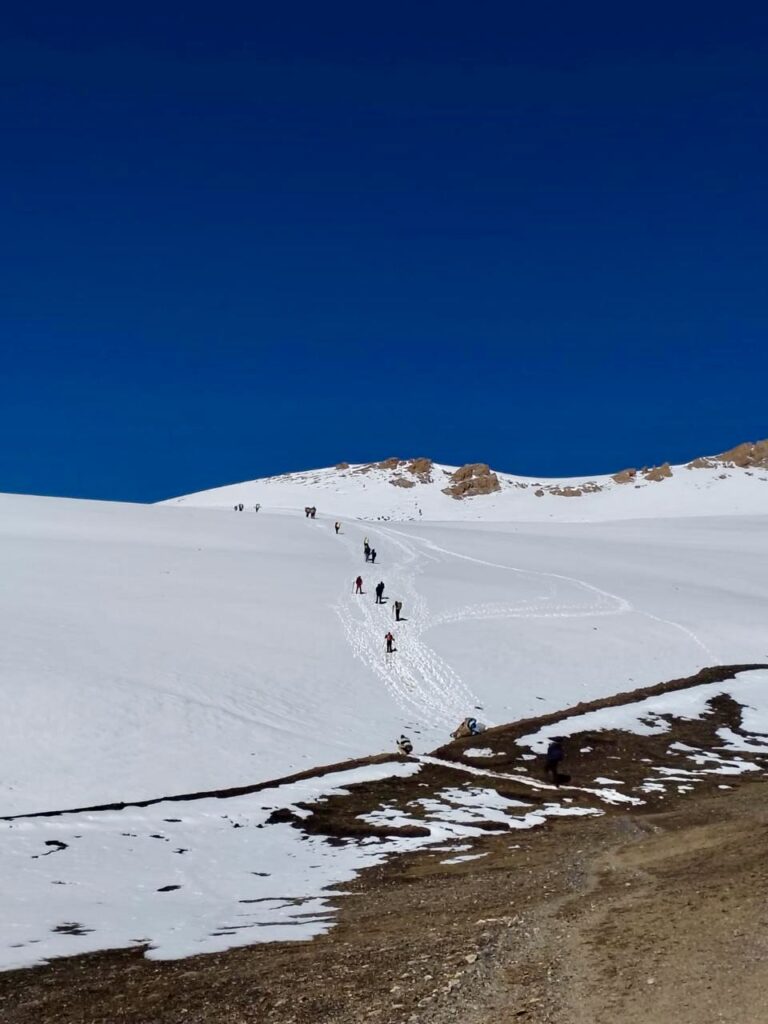
Saribung Peak
Journey through ancient Mustang, sacred high-altitude lakes and remote Himalayan wilderness to an unforgettable 6,328 m summit. This remarkable trek takes you to the…
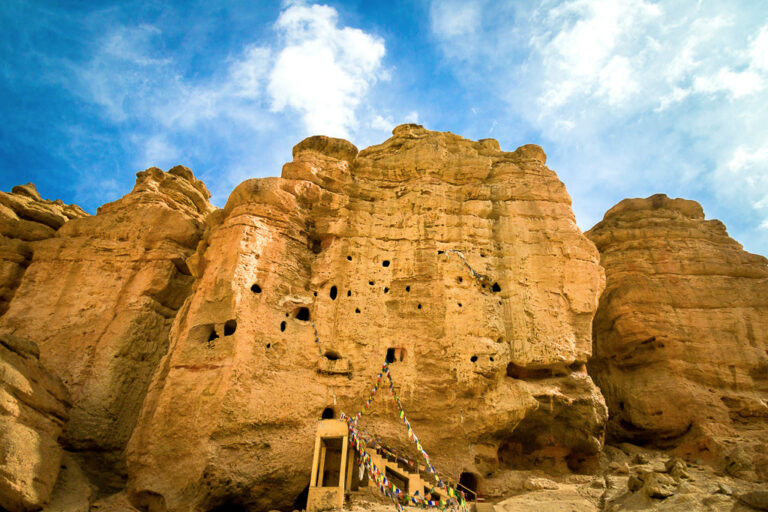
Upper Mustang
Explore Lo Manthang & Ancient Himalayan Culture The Upper Mustang Trek offers a rare opportunity to explore the once-forbidden, isolated Buddhist kingdom of Mustang,…