Upper Dolpo – Shey Gompa
- Duration 29 Days
- Max altitude 5350m
- Difficulty Challenging
- Group size 4-16 Pax
- Best season Spring & Autumn
- Stay Camping
Beyond Turquoise Lakes into Nepal’s Last Himalayan Wilderness
Inner /Upper Dolpo Shey Gompa has been referred to as the last enclave of pure Tibetan culture. The region is remote and retains the feel of Tibet as it was in the pre-Chinese era. It is a vast and rugged landscape inhabited by a hardy, enterprising folk who live in some of the highest villages in the world.Dolpa Shey Gompa
has only been open for Trekking Walking Holiday and tourism since 1989.
We reach Upper Dolpo Shey Gompa passing through the six famous passes like Nangdalo Pass (5350m), Sela (Gela) La Pass (5094m), Khoma Pass( 4660m), Shimen Pass (4260m), Mo La Pass (5027m), Niwar Pass (5110m), Jungen La Pass (5550m), Bhima Lojun La Pass (4460m). So the Walking to Upper Dolpo Shey Gompa and Jomsom is very adventurous.
Legend has it that the revered Buddhist saint, “Guru Rinpoche who spread Tibetans Buddhism, throughout the Himalayas, discovered this hidden land 1700 years ago. Called or refuge, it has been inhabited by Tibetan nomads, called for over a thousand years. During the course of the trek, we will visit Buddhist and Bönpo (shamanistic pre-Buddhist) monasteries. Of particular interest is Shey Gompa, this monastery is revered as a most important site, where twice a year pilgrims make a kora (or circuit) of Crystal Mountain on the day of Full Moon and No Moon Day. Crystal Mountain is known as the younger ://hvtreks.com/camping/humla-kailash-tibet Mount Kailash in Tibet.
According to the local Himalayan Vacation Treks and Expedition resident guide, living full time in Upper Dolpa is difficult. The majority of people do not stay during winter and migrate to (low altitude land) where they have built winter houses. Come summer, they return with firewood and food from Besi loaded upon Yaks.
Upper Dolpo Shey Gompa including David Snelgrove’s early “Himalayan Pilgrimage” and more recently Peter Matthiessen’s “The Snow Leopard”. Too, Upper Dolpo is the location for Eric Valli’s superb film “Himalaya”. The high altitude Dolpha region is renown as the area for several ancient powerful medicinal herbs, Yarsagumbo (ophiocordyceps sinensis) and Panchaurle (Dactylorhiza hatagirea). Traditionally, from May to September the villagers can be found collecting the Panchaurle orchid root and digging for the fungus-filled caterpillar Yarsagumbo, both prized in China for their tonic properties.
- Cross Jungben La at 5,550 m
- Vast Trans-Himalayan mountain panoramas
- Scenic flights to remote Dolpo
- Explore Shey Gompa and Tibetan Buddhist culture
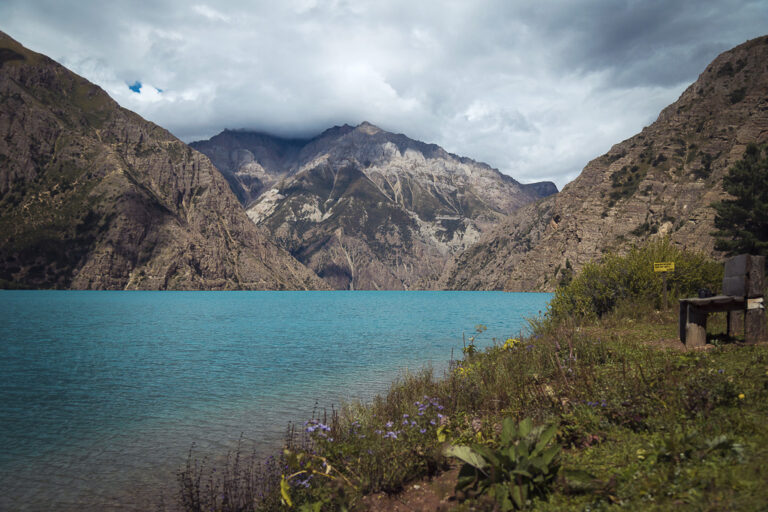
- Camp beside turquoise Phoksundo Lake
- Journey through isolated highland settlements
Best time to go
- J
- F
- M
- A
- M
- J
- J
- A
- S
- O
- N
- D
- Best
- Good
- Not Recommended
Difficulty
Challenging
Demanding high-altitude adventures involving long days, remote terrain, high passes or mountaineering sections that may require specialised equipment. Strong fitness and previous high-altitude or relevant climbing experience are recommended.
Day by day
Day01 Arrival in Kathmandu 1400m Airport Transfer
Welcome to Kathmandu, the capital city of Nepal, renowned for its historical monuments, Hindu temples, and Buddhist stupas and monasteries. We meet our guests at Tribhuvan International Airport. A representative will be waiting with a Himalayan Vacation Treks and Expedition placard displaying our guests’ names. After dropping luggage at the hotel, guests can relax and rest.
Day02 Sightseeing in Kathmandu 1400m Full day
A local guide will be available to escort you for sightseeing according to your preferences. Sightseeing may include Kathmandu Durbar Square, Pashupatinath, Boudhanath, Patan Durbar Square, and Swayambhunath. Starting after breakfast, usually at 9:00 am, the exploration of Kathmandu Valley can continue until 4:00 pm. Lunch and dinner will be at your own expense.
Day03 Kathmandu – Nepalgunj 165m 1 hr flight
Today we take an hour-long flight from Kathmandu to Nepalgunj in western Nepal. Nepalgunj is located near the Nepal–India border and serves as a gateway to remote western Himalayan regions. The town is culturally diverse and offers opportunities to visit its local market, nearby villages, and other attractions. We spend the night at a hotel in Nepalgunj.
Day04 Nepalgunj – Jhuphal – Dunai 2140m 45 min flight + 2-3 hrs trek
After breakfast, we take a small aircraft flight from Nepalgunj to Jhuphal, a picturesque settlement on a ridge surrounded by rolling foothills. The flight offers views toward the Annapurna and Dhaulagiri ranges. Upon arrival, we meet our trekking team and begin walking through terraced fields toward the Bheri River. We follow the river gorge to Dunai, the administrative centre of Dolpo, where we camp for the night.
Day05 Dunai – Ankhe 2750m 5-6 hrs trek
After leaving Dunai, we cross a suspension bridge over the Phoksundo River and head west. The trail climbs along the Thuli Bheri Valley through barren terrain before entering the Phoksundo River Valley. Along the way, we enjoy views of Kagmara Peak and pass walnut orchards and the villages of Dhera and Rahagaun. We then descend through forest toward Ankhe, where we camp overnight.
Day06 Ankhe – Ringmo / Phoksundo Lake 3641m 5-6 hrs trek
Today the trail follows a forested riverbank before climbing steeply through a series of ascents and descents. Streams along the trail provide opportunities to rest and cool down. We eventually leave the forest and traverse a green slope high above the river. The route then descends through forest, follows a stone staircase toward the riverbank, and continues through Sulighat toward Ringmo and Phoksundo Lake.
Day07 Phoksundo Lake Acclimatisation 3641m Rest day
Today is a rest and acclimatisation day at Phoksundo Lake. Our Himalayan Vacation Treks and Expedition guide will arrange a short walk to Ringmo village and its Tibetan Buddhist gompa. Ringmo is inhabited by Dolpo people who maintain traditional clothing, jewellery, boots, and customs influenced by Tibetan culture. We also have time to enjoy the extraordinary scenery surrounding the turquoise lake.
Day08 Phoksundo Lake – Campsite 3750m 7-8 hrs trek
Today we follow a thrilling and challenging narrow trail around Phoksundo Lake. After approximately 30 minutes, we begin climbing while crossing small forest streams. Along the route, we enjoy views of Kanjirowa and the surrounding wilderness. We eventually reach our campsite in the forest beside the Phoksundo River.
Day09 Campsite – Nangdalo La Base Camp 4717m 6-7 hrs trek
We follow Tuk Khyagsa Khola through a deep valley covered with shrubs. The climb is steep before the terrain eventually opens into the broad Nangdalo La Base Camp. We spend the night at 4717m, where temperatures are expected to be very cold.
Day10 Nangdalo La Base Camp – Nangdalo La Pass – Shey Gompa 4160m 6-7 hrs trek
Today is a major trekking day as we cross Nangdalo La Pass at 5350m. Snow may cover parts of the trail, and we may need to establish a safe route across the pass. Although the climb is demanding, it rewards us with spectacular views of Kanjirowa and surrounding Himalayan peaks. We descend alongside Hubaiun Khola before reaching Shey Gompa, a traditional Tibetan-influenced village with stone-and-mud houses, prayer flags, and an ancient Buddhist monastery. We spend two nights here.
Day11 Shey Gompa Acclimatisation 4160m Rest day
Today we rest at Shey Gompa for acclimatisation. Our guide will arrange a hike to Tsakang Shey Monastery at 4575m, dramatically situated on a red-rock cliff. We may see herds of blue sheep, Himalayan vultures, and other high-altitude wildlife. The surrounding wilderness is also known as snow leopard habitat.
Day12 Shey Gompa – Sela La – Namgung 4606m 5-6 hrs trek
Today we follow Sephu Khola and climb toward Sela La at 5094m. From the pass, we enjoy impressive views of Kanjirowa and the surrounding mountain ranges. We then descend toward Namgung, a remote village situated within a landscape cut by deep ravines. We camp near the village and may explore it before evening.
Day13 Namgung – Saldang 3770m 3-4 hrs trek
Today we walk through a landscape filled with Buddhist mani stones, prayer flags, and ancient cultural landmarks. Saldang consists of fortress-like houses built along the base of a plateau above the Namgung Khola. Despite the harsh environment, the surrounding land supports barley, potatoes, wheat, and seasonal vegetables. The local people are semi-nomadic Tibetan Buddhists who rely on agriculture, livestock, horses, and seasonal highland grazing. We camp beside the river near Saldang.
Day14 Saldang – Khoma Gaon 4060m 4-5 hrs trek
Today we descend toward Nagon Khola before climbing over Khoma Pass at 4460m. We then continue toward Khoma Gaon, a lively whitewashed village with schools, gompas, stupas, mani walls, and painted chortens. We spend the night in a tented camp.
Day15 Khoma Gaon – Shimen Gaon 3850m 3-4 hrs trek
Today we follow a relatively easy trail through small trees and shrubs toward Garchu Khola. We climb Shimen Pass at 4260m before descending toward Panjyan Khola. Upon reaching Shimen Gaon, we have time to relax and visit the beautiful Shimen Gompa and nearby stupas. We camp beside Panjyan Khola.
Day16 Shimen Gaon – Tinje Gaon 4110m 5-6 hrs trek
Today we follow Panjyan Khola along a relatively easy trail that is also used by local motorbikes. The journey offers beautiful views of green hills, rivers, and Buddhist stupas. We pass Sonam Gaon, cross Mukdem Khola, and continue toward Tinje. Tinje is a large Tibetan Buddhist village with clinics, shops, and monasteries. We camp beside the river in a peaceful natural setting.
Day17 Tinje Gaon Rest Day 4110m Rest day
Today is dedicated to rest and village exploration. The trekking team can use the day for washing and preparation. We may visit a local school, interact with children, explore Tinje village, or visit a gompa.
Day18 Tinje Gaon – Rakpa Khola 4600m 6-7 hrs trek
After crossing Polte Khola, we continue alongside Panjyan Khola. The relatively level trail follows a shallow ravine through remote high-altitude terrain. In favourable weather, we may see blue sheep, yaks, vultures, mountain rats, and other Himalayan wildlife. We spend the night near Rakpa Khola.
Day19 Rakpa Khola – Mo La Pass – Chharka Bhot 4302m 7-8 hrs trek
We begin by following Khein Khola and then continue alongside Lakkyam Khola. The ascent toward Mo La Pass at 5027m is initially gradual before becoming steep for the final section. From the pass, we can see the distant high Himalayan passes of Jyanche Bhanjyang, Pindu Bhanjyang, and Kankun Bhanjyang. This is a long trekking day, so we carry a packed lunch. We camp at Chharka Bhot.
Day20 Chharka Bhot Rest Day 4302m Rest day
Today we rest and explore Chharka Bhot, a traditional Tibetan village with local shops, teahouses, farmland, livestock, and friendly residents. We can visit Sarchhen Gompa and learn more about the village’s Buddhist traditions and cultural practices.
Day21 Chharka Bhot – Nulungsumade Kharka 4987m 8-9 hrs trek
Today we follow Chharka Tulsi Khola across rocky terrain where snow may be present. Along the route, we may observe blue sheep, yaks, donkeys, and other mountain wildlife. Horses and donkeys are commonly used for transporting supplies through this remote region. We spend the night at Nulungsumade Kharka, near the confluence of two rivers.
Day22 Nulungsumade Kharka – Niwar Pass – Jungben La – Phedi 4247m 7-8 hrs trek
Today we cross Niwar Pass at 5120m through a barren, rain-shadow landscape. The terrain has little vegetation but supports blue sheep and occasionally snow leopards. After Niwar Pass, the trail becomes steep and narrow before climbing toward Jungben La at 5550m, the highest point of the journey. From the pass, we enjoy magnificent mountain views before descending across Lsannimar Khola toward Phedi Camp.
Day23 Phedi – Santa Village 4247m 4-5 hrs trek
Today we descend from Phedi toward Kyalunpa Khola. After crossing the stream, we climb again through areas of shrubs and mountain vegetation. The trail includes uphill, downhill, and flatter sections before crossing Jharche Khola and reaching Santa Village. Santa is an agricultural settlement with a school, local shops, stupas, and surrounding fields growing barley, wheat, potatoes, cabbage, and cauliflower. Yaks and sheep are commonly raised here.
Day24 Santa Village – Kagbeni via Bhima Lojun La 2818m 4-5 hrs trek
Today we climb for approximately two hours from Santa Village before joining an off-road route toward Bhima Lojun La Pass at 4460m. After crossing the pass, we descend along a narrow trail through shrubs and trees toward the Kali Gandaki Valley. We eventually reach Kagbeni, a historic Buddhist settlement at the gateway to Upper Mustang. Kagbeni has monasteries, stupas, teahouses, shops, a health post, and an Annapurna Conservation Area check post. The surrounding area is known for barley, potatoes, vegetables, apples, yaks, and sheep.
Day25 Kagbeni – Jomsom – Pokhara 825m 7-8 hrs drive
Today we travel from Kagbeni to Pokhara by vehicle. The road toward Jomsom remains rough and under construction in places. From Jomsom, the journey follows the Kali Gandaki River through settlements such as Tukuche and Ghasa. Road conditions can be challenging, with rough sections and possible rockfalls. From Beni to Pokhara, the road is mostly paved and generally in better condition.
Day26 Pokhara Sightseeing 827m Full Day
Today we relax in Pokhara after completing the demanding journey. Pokhara offers a pleasant climate, beautiful valley views, lakeside restaurants, and a peaceful atmosphere. We can enjoy sightseeing, boating, local cuisine, and time around Phewa Lake.
Day27 Pokhara – Kathmandu 1400m 6-7 hrs by tourist bus
Today we take a tourist bus from Pokhara to Kathmandu. The journey follows winding highways through hills, river valleys, small settlements, and terraced farmland. Upon reaching Kathmandu, the remainder of the day is free for shopping, relaxation, or preparing for the journey home.
Day28 Rest / Shopping in Kathmandu or Bhaktapur Sightseeing 1400m Rest day / 3-4 hrs sightseeing
Today is free for rest and shopping. If you wish, an optional sightseeing trip to the UNESCO World Heritage city of Bhaktapur can be arranged at an additional cost. The tour lasts approximately four hours. In the evening, Himalayan Vacation Treks and Expedition will provide a farewell dinner.
Day29 Departure from Kathmandu 1400m Airport Transfer
Today we check that our guests have all necessary documents and belongings. We confirm flight tickets before departure and advise guests to keep their passports and tickets in their hand luggage. A Himalayan Vacation Treks and Expedition representative will take our valued guests to the airport three hours before the scheduled flight and bid them farewell.
A steady, well-paced climb
Altitude profile
Highest point reached each day, in metresView as table
| Day | Highest point | Altitude |
|---|---|---|
| Day 1 | Kathmandu | 1400 m |
| Day 2 | Kathmandu | 1400 m |
| Day 3 | Kathmandu | 1400 m |
| Day 4 | Jhuphal | 2475 m |
| Day 5 | Ankhe | 2750 m |
| Day 6 | Phoksundo Lake | 3641 m |
| Day 7 | Phoksundo Lake | 3641 m |
| Day 8 | Campsite | 3750 m |
| Day 9 | Nangdalo La Base Camp | 4717 m |
| Day 10 | Nangdalo La Pass | 5350 m |
| Day 11 | Tsakang Shey Monastery | 4575 m |
| Day 12 | Sela La | 5094 m |
| Day 13 | Namgung | 4606 m |
| Day 14 | Khoma Pass | 4460 m |
| Day 15 | Shimen Pass | 4260 m |
| Day 16 | Tinje Gaon | 4110 m |
| Day 17 | Tinje Gaon | 4110 m |
| Day 18 | Rakpa Khola | 4600 m |
| Day 19 | Mo La Pass | 5027 m |
| Day 20 | Chharka Bhot | 4302 m |
| Day 21 | Nulungsumade Kharka | 4987 m |
| Day 22 | Jungben La | 5550 m |
| Day 23 | Phedi | 4247 m |
| Day 24 | Bhima Lojun La Pass | 4460 m |
| Day 25 | Kagbeni | 2818 m |
| Day 26 | Pokhara | 827 m |
| Day 27 | Kathmandu | 1400 m |
| Day 28 | Bhaktapur | 1401 m |
| Day 29 | Kathmandu | 1400 m |
Clear pricing, no surprises
Included
- Airport pickups and drops in a private vehicle
- 4 night hotel accommodation in Kathmandu with breakfast
- 2 night hotel accommodation Pokhara with breakfast
- Farewell dinners in Kathmandu
- 1 Night Hotel accommodation in Nepalgunj with breakfast
- All meals (breakfast, lunch and dinner) during the Walking , Trekking holiday
- Camping fee Overnight stays in two-person tents
- All ground transportation on a comfortable vehicle as per the itinerary
- Domestic flights (Kathmandu- Nepalgunj – Jhuphal
- Guided city tour in Kathmandu by private vehicle
- Cook and Kitchen and potties team
- Kitchen equipment and tents for trekking.
- Mountain experienced, English-speaking and government-licensed friendly guide and assistant guide (Upto 4 Persons one guide and assistant guide for more than 4 persons)
- Staff costs including their salary, insurance, equipment, domestic airfare, food and accommodation
- Himalayan Vacation treks and expedition trekking bag/15 kg capacity bag, and Trekking map/card are yours to take
- Set light mobile tell phone during the Walking Trekking holiday
- Shey gump Special permit upper Dolpo Trekking Hiking holiday
- Shey-Phoksumdo National Park permit
- Lower Dolpo Normal permit
- All necessary paperwork and Trekking permits
- First Aid Medical kit (carried by your Trekking leader for Nepali staff
- Nights in double/single Tents for the Trekking walking
- All government and local taxes
Not included
- Nepalese visa fee
- Excess baggage charge(s)
- Extra night accommodation in Kathmandu because of early arrival, late departure, early return From mountain (due to any reason) than the scheduled itinerary
- Lunch and evening meals in Kathmandu, Pokhara and Nepaljung
- International flights
- Travel and rescue insurance
- Down jacket and sleeping bag and Walking Hiking shoes .
- Personal expenses (phone calls, laundry, bar bills, battery recharge, extra porters, bottle or boiled water, shower, etc.)
- Tips for guide(s), porter(s) and driver(s)
Good to know
1. Why is Upper Dolpo organised as a camping trek?
Upper Dolpo travels through very remote settlements and wilderness areas where conventional trekking lodges may not be available. HV Treks therefore operates fully organised camping treks with guides, porters, cooks and camping equipment, allowing the journey to reach areas that ordinary teahouse treks cannot.
2. Can I trek Upper Dolpo during Nepal's monsoon?
Surprisingly, yes. Dolpo lies within the Himalayan rain shadow, so it receives considerably less monsoon influence than many trekking regions farther south. This makes summer an important trekking window rather than an automatic off-season.
3. What makes Upper Dolpo feel so different from Nepal's popular trekking routes?
Upper Dolpo is characterised by isolated settlements, barren Tibetan Plateau-style landscapes, ancient Buddhist culture and huge stretches of sparsely populated wilderness. HV Treks notes that the lifestyle of Dolpo communities has strong similarities with neighbouring Tibetan culture.
4. Will I see Shey Phoksundo Lake and Shey Gompa?
These are among the signature attractions of the Dolpo region. HV Treks specifically highlights the remarkable Shey Phoksundo Lake and Shey Gompa, with the latter representing the area’s well-preserved Buddhist traditions.
5. Who should choose an Upper Dolpo Camping Trek?
This trek is best for experienced trekkers looking for remoteness rather than comfort. Camping for many nights, unpredictable logistics, long walking days, high altitude and limited infrastructure are all part of the adventure. If someone wants a polished teahouse trail with cafés and frequent facilities, Upper Dolpo is probably not the right choice. HV Treks specifically positions its camping trips around remote, less-touristic areas where conventional lodge infrastructure is often absent.
You may also like
Lower Dolpo
One of the country’s most remote and untouched regions Dolpo, located in Nepal’s Karnali Province, is one of the country’s most remote and untouched…